
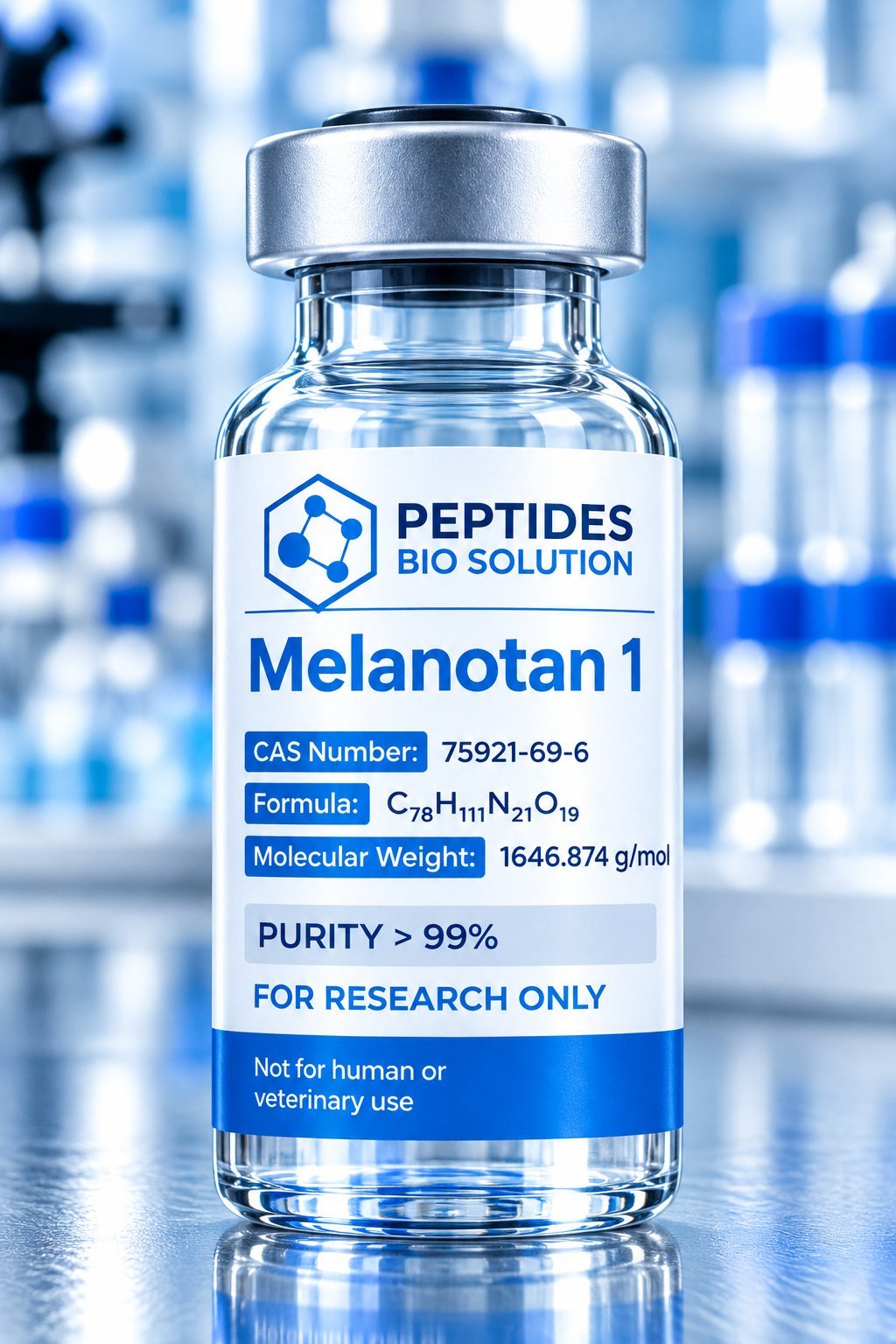
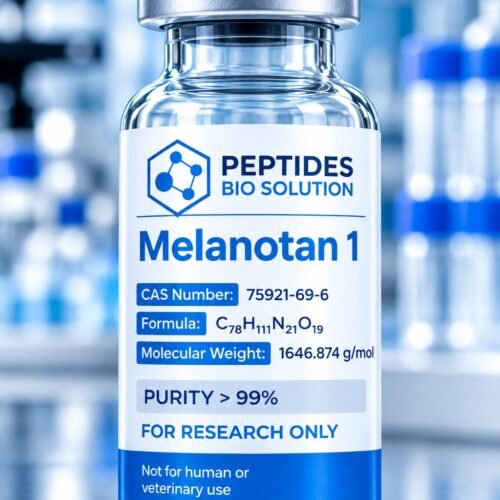
Melanotan 1 (10mg)
$38.00
Specifications
Molecular Weight: 1646.8 g/mol
Molecular Formula: C78H111N21O19
Sequence: Ac-Ser-Tyr-Ser-Nle-Glu-His-D-Phe-Arg-Trp-Gly-Lys-Pro-Val-NH2
Synonym(s): MT-1
Did you like this product? Add to favorites now and follow the product.
(+800) 1234 5678 90 Start Live Chat
Description
Melanotan 1 Peptide
Melanotan 1 (MT-1) is a synthetic equivalent of alpha-melanocyte-stimulating hormone (alpha-MSH). The peptide has been exhaustively researched through observation of research models displaying signs of erythropoietic protoporphyria to reduce potential phototoxicity or UV-related damage.[1] It has been suggested that the peptide may have the potential to influence diverse physiological processes like feeding patterns, central nervous system operations, blood pressure, and more.
Specifications
Molecular Weight: 1646.8 g/mol
Molecular Formula: C78H111N21O19
Sequence: Ac-Ser-Tyr-Ser-Nle-Glu-His-D-Phe-Arg-Trp-Gly-Lys-Pro-Val-NH2
Synonym(s): MT-1
Melanotan 1 Research
Here is a basic overview of what researchers have to say about each of these and other related receptors:
- The melanocortin 1 receptor (MC1R) is speculated to be present in melanocytes in cells from skin structure, hair, and eye tissues, and it’s the main target of MT-1.
- The melanocortin 2 receptor (MC2R) is believed to be located in the adrenal cortex, the outer layer of the adrenal glands. It is proposed that this receptor might participate in the production of cortisol, and neither MT-1 nor Alpha-MSH interacts with it.
- The melanocortin 3 receptor (MC3R) is believed to be expressed in several tissues, including the brain and placenta. MC3R may contribute to the regulation of appetite in experimental models.
- The melanocortin 4 receptor (MC4R) is thought to be situated within the central nervous system, particularly in the hypothalamus. It is speculated that this receptor might influence nerve cells associated with regulating copulatory behavior and arousal.
- The melanocortin 5 receptor (MC5R) is expressed across multiple tissues, but its role still needs to be established.
MT-1 was initially developed to induce melanin production and pigmentation by interacting with the same receptors. These two amino acid modifications may help by increasing receptor target affinity and supporting molecular stability for a longer half-life. Subsequent research on the peptide and other melanocortin-binding proteins helped scientists better explore the melanocortin signaling system.
Related products
Recently Viewed Products
Reviews
There are no reviews yet.