
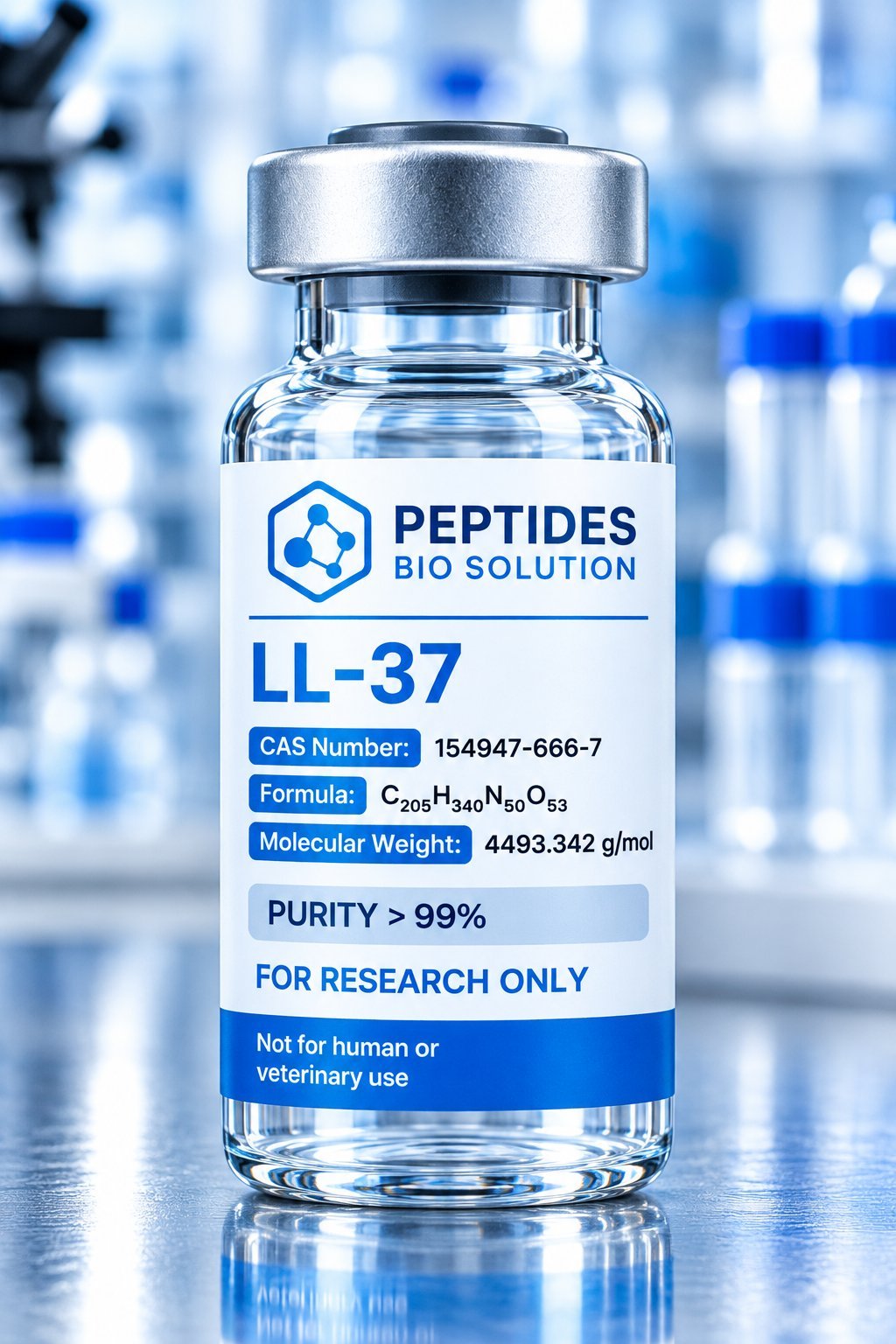
LL-37 (5mg)
$85.00
Specifications
Other Known Titles: CAP-18
Molecular Formula: C205H340N50O53
Molecular Weight: 4493.34 g/mol
Sequence: Leu-Leu-Gly-Asp-Phe-Phe-Arg-Lys-Ser-Lys-GluLys-Ile-Gly-Lys-Glu-Phe-Lys-Arg-Ile-Val-Gln-Arg-Ile-Lys-Asp-Phe-Leu-Arg-Asn-Leu-Val-Pro-ArgThr-Glu-Ser
Did you like this product? Add to favorites now and follow the product.
(+800) 1234 5678 90 Start Live Chat
Description
LL-37 Peptide
LL-37 is a Cathelicidin, a protein family of unique and diverse functions. These peptides, produced by macrophages and polymorphonuclear leukocytes (both types of white blood cells), have been suggested to exhibit bactericidal action. The entire group is classified as antimicrobial peptides (AMPs). The peptide, in particular, has been researched in relation to autoimmune disease, cancer, and wound recovery.[1] For example, researchers note that “Corneal and conjunctival epithelia express LL-37 as part of mucosal innate immunity to protect against bacterial and viral ocular infections.”
Specifications
Other Known Titles: CAP-18
Molecular Formula: C205H340N50O53
Molecular Weight: 4493.34 g/mol
Sequence: Leu-Leu-Gly-Asp-Phe-Phe-Arg-Lys-Ser-Lys-GluLys-Ile-Gly-Lys-Glu-Phe-Lys-Arg-Ile-Val-Gln-Arg-Ile-Lys-Asp-Phe-Leu-Arg-Asn-Leu-Val-Pro-ArgThr-Glu-Ser
LL-37 Peptide Research
LL-37 and Inflammatory Disease Models
LL-37, although essentially researched as an antimicrobial peptide, has also been examined in research related to different inflammatory diseases such as lupus, rheumatoid arthritis, psoriasis, and atherosclerosis. LL-37 researchers suggest the peptide’s diverse immune system modulating behaviors based on the type of cells involved and the local inflammatory environment. It has been suggested to reduce apoptotic death of keratinocytes, improve IFN-alpha synthesis, suppress signaling through toll-like receptor 4 (TLR4), modify chemotaxis of neutrophils and eosinophils,[2] trigger IL-18 production, and potentially reduce levels of atherosclerotic plaques. Interestingly, LL-37 (aka CAP-18) appears to stimulate the immune system in a different manner depending on the trigger. Cell culture studies have observed the importance of the inflammatory environment in determining the immune response to LL-37. T-cells appear to improve inflammatory action via LL-37 when not activated but minimize the inflammatory action when activated.
The peptide appears to mediate homeostasis of immunological response, thus controlling it from being hyperactive in instances of infection. There appears to be a strong correlation between the peptide levels and the extent of the disease. Initially, CAP-18 was thought to promote autoimmune disorders, but recent results have suggested it may help to abate the damage.[3] The researchers outline that the peptide has a role “in the modulation of immune and inflammatory pathways and their effects on autoimmune and inflammatory diseases.” High levels of the peptide may thus help check further increased inflammation.
Related products
Recently Viewed Products
Reviews
There are no reviews yet.