
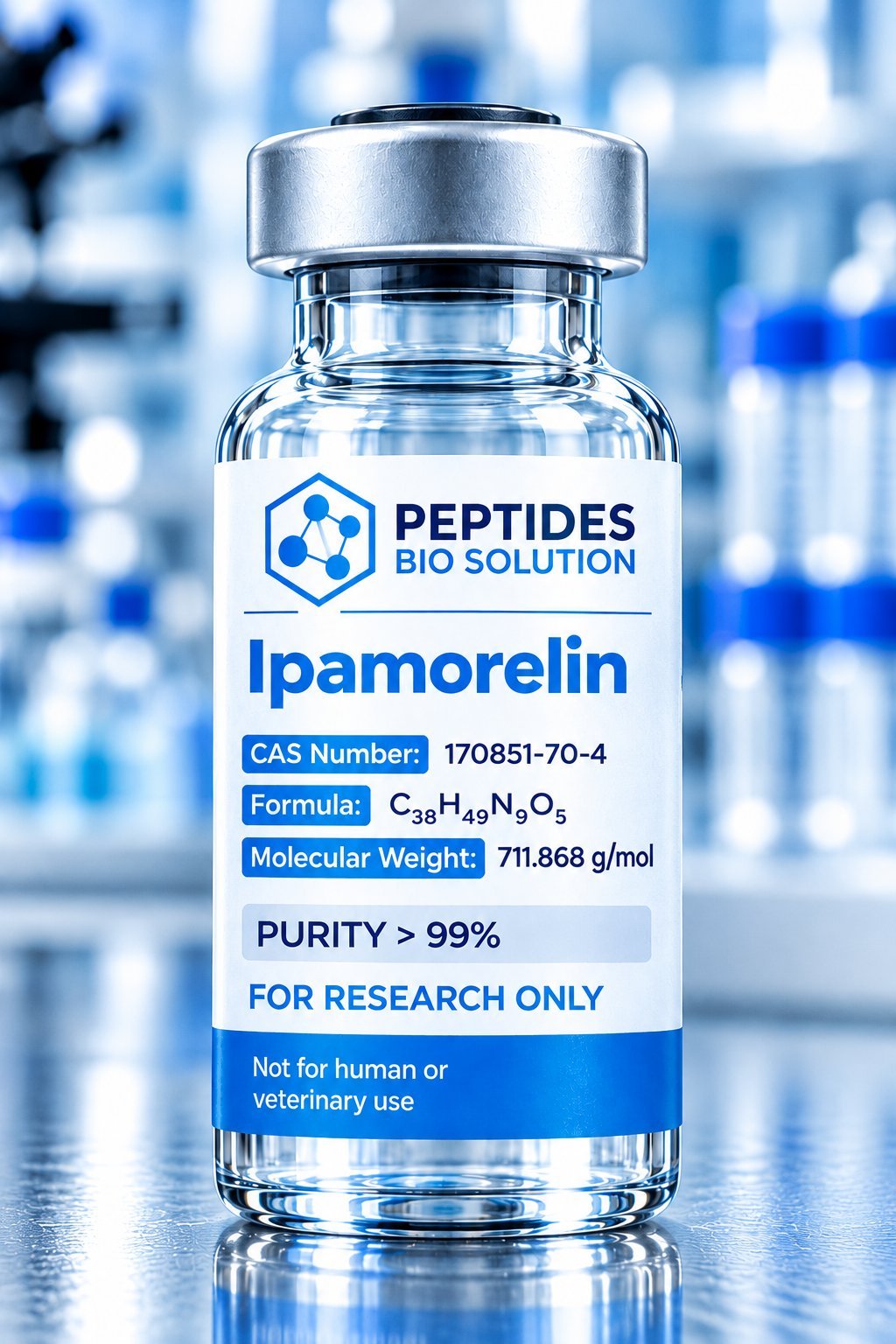
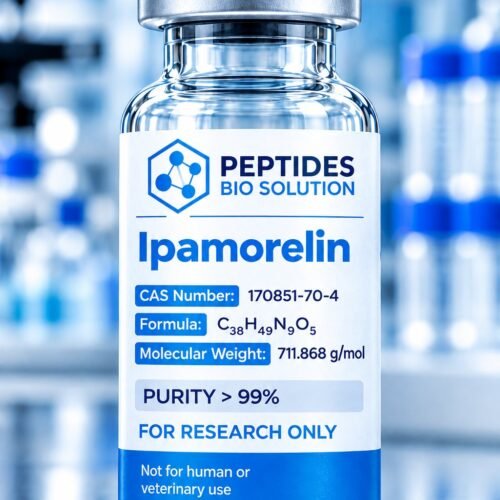
Ipamorelin (5mg)
$50.00
Specifications
Molecular Weight: 1302.4 g/mol
Molecular Formula: C63H83N17O14
Sequence: YNWNSFGLRF
Other Known Titles: KISS-1, Protein KISS-1, Metastin, Kp-10 peptide
Did you like this product? Add to favorites now and follow the product.
(+800) 1234 5678 90 Start Live Chat
Description
Ipamorelin Peptide
Ipamorelin is a small pentapeptide that binds to the receptor of ghrelin/growth hormone secretagogue (GHS), and is speculated to trigger the release of growth hormone via pituitary cells. Research has suggested the peptide to be selective in its mode of action.[1] Ipamorelin, researchers report, does not appear to induce non-specific release of hormones like prolactin, thyroid-stimulating hormone, ACTH, luteinizing hormone, follicle-stimulating hormone, or cortisol. The high specificity of the peptide makes it an ideal model for the study of selectivity in receptor binding. It appears to function through interaction with cognate receptors on the target cell surface and mediates a cellular response. Ipamorelin may induce secretions from the pituitary gland, promoting growth in animal study models.[2] In addition, it may not only trigger the expression of insulin-like growth factor-1(IGF-1) but may also inhibit the secretion of somatostatin. IGF-1 is considered to be the main anabolic mediator of growth hormone.
Specifications
Molecular Formula: C38H49N9O5
Molecular Weight: 711.86 g/mol
Sequence: Aib-His-D-2Nal-D-Phe-Lys-NH2
Ipamorelin Research
Ipamorelin and The Growth Hormone Secretagogue Receptors
Ipamorelin may be a growth hormone secretagogue receptor agonist stimulating endogenous growth hormone (hGH) release. More specifically, Ipamorelin is classified as a growth hormone secretagogue receptor 1a (GHS-R1a), also the receptor for the endogenous hormone ghrelin. Ghrelin is known as the hunger hormone and appears to also regulate hGH release by activating the GHS-R1a in pituitary cells.[3] In vitro experiments indicate that Ipamorelin’s interaction with the Growth Hormone Secretagogue Receptor type 1a (GHS-R1a) might influence the somatotroph cells located in the anterior segment of the pituitary gland.[4] This potential influence is thought to initiate a cascade of cellular signaling mechanisms. A key component in this signaling cascade is phospholipase C (PLC), a crucial enzyme that, according to some scientific hypotheses, may facilitate the production of inositol triphosphate (IP3) and diacylglycerol (DAG). The emergence of these secondary messenger molecules, particularly IP3, may stimulate the release of calcium ions (Ca2+) from the cell’s internal reserves. Concurrently, DAG is believed to potentially activate protein kinase C (PKC), a family of enzymes believed to play significant roles in various cellular functions. The hypothesized increase in calcium ion concentration within the cells, along with the potential activation of PKC, might lead to the exocytosis of vesicles that contain growth hormones. Research in clinical settings has suggested that exposure to Ipamorelin may cause notable increases in hGH synthesis by these pituitary cells. Specifically, Ipamorelin was observed to elevate growth hormone concentrations up to approximately 80 milli-international units per liter (mIU/l), which is about 26.6 nanograms per milliliter (ng/ml). Comparatively, when these increases are quantified against a placebo baseline of 1.31 mIU/l or 0.4 ng/ml, there seems to be an enhancement that might exceed 60 times the baseline levels.[5]
Related products
Recently Viewed Products
Reviews
There are no reviews yet.