

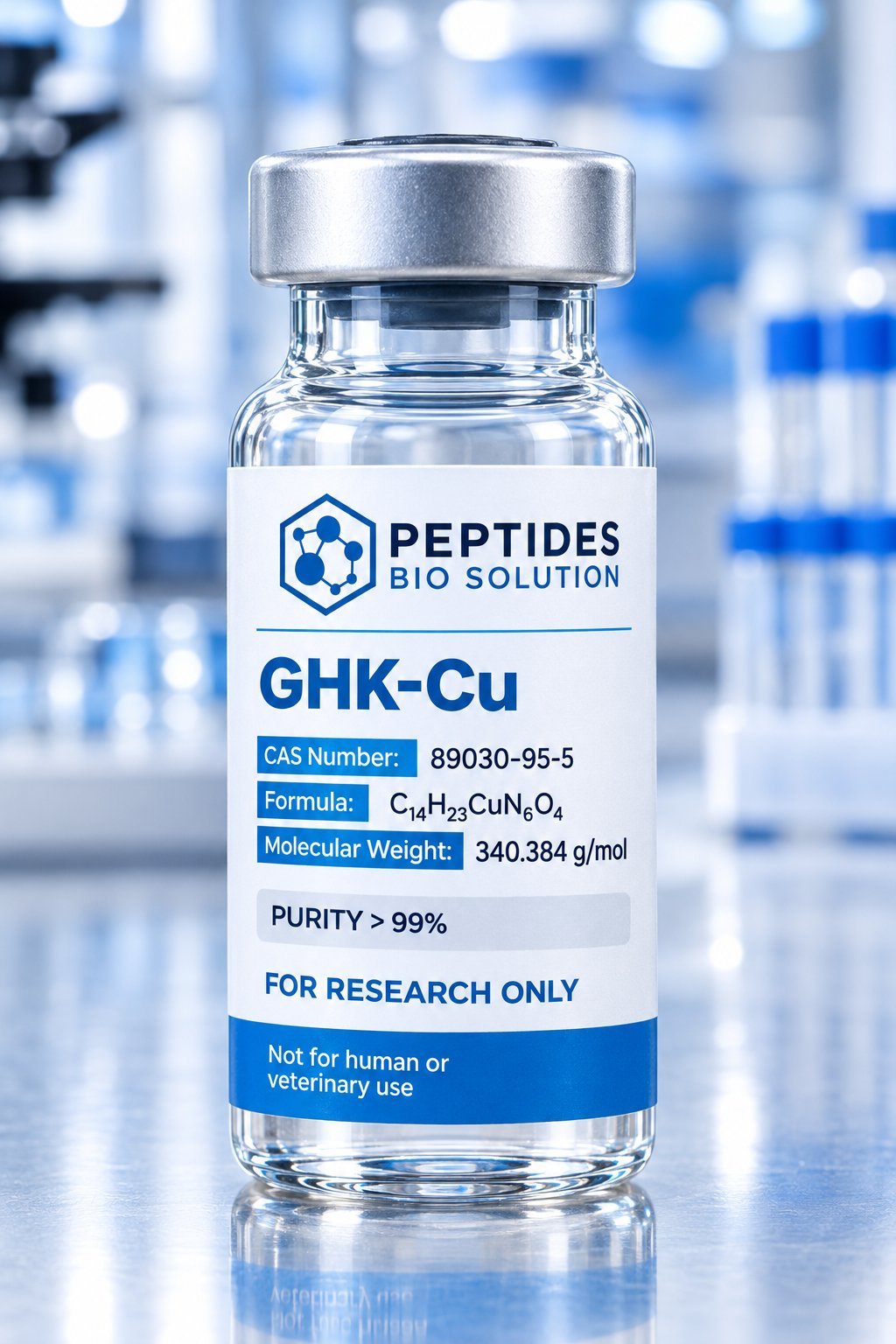
GHK-Cu (200mg)
$180.00
Specifications
Molecular Formula: C14H23CuN6O4
Molecular Weight: 340.38 g/mol
Sequence: Gly-His-LysCu.xHAc
Did you like this product? Add to favorites now and follow the product.
(+800) 1234 5678 90 Start Live Chat
Description
GHK-Cu Peptide
GHK-Cu (Copper Tripeptide) is a tripeptide that scientists assert is naturally present in blood plasma. It has a sequence of Gly-His-Lys (glycine, histidine, and lysine,) which readily binds with copper to form the copper tripeptide. Scientific studies carried out in different research laboratories worldwide have explored its various biological roles. GHK-Cu exhibits some potential to influence various biological pathways, including an apparent induction of tissue repair, attraction of immune cells, antioxidant and anti-inflammatory characteristics, activation of collagen and glycosaminoglycan synthesis in skin fibroblasts, regulation of extracellular matrix components like decorin, and possible promotion of blood vessel growth. Recent studies indicate its potential role in stem cell biology and anti-tumor research as well.
Specifications
Molecular Formula: C14H23CuN6O4
Molecular Weight: 340.38 g/mol
Sequence: Gly-His-LysCu.xHAc
GHK-Cu Peptide Research
GHK-Cu and Potential Mechanisms
Research suggests that GHK-Cu might function as a repair signal by potentially imitating the presence of a GHK triplet in the collagen alpha-2 type I chains.[1] Specifically, the tripeptide sequence Gly-His-Lys may naturally signal the presence of “broken” collagen. The breakdown of collagen typically corresponds with the disintegration of collagen fibers, often occurring due to tissue damage. It is hypothesized that this peptide sequence might act as a repair signal in cellular communication processes, particularly targeting fibroblasts. Fibroblasts are specialized cells considered crucial for producing new collagen fibers, which may provide structural support in various tissues. The interaction between the GHK sequence and fibroblasts is speculated to potentially trigger a series of biological events. These events may lead to the synthesis of new collagen, thereby possibly contributing to tissue repair and regeneration mechanisms.
Another potential mechanism suggested by experimental research is the potential GHK-Cu action on synthesis of matrix metalloproteinase-2 (MMP-2) and tissue inhibitors of metalloproteinases (TIMPs), which are deemed crucial for extracellular matrix remodeling. Firstly, researchers observed that GHK-Cu increases MMP-2 levels in the conditioned media of cultured dermal fibroblasts, a process not replicated by GHK alone, suggesting that the presence of copper is posited to be necessary for this activity.[2] This increase in MMP-2 was also accompanied by a rise in MMP-2 mRNA levels, indicating that GHK-Cu potentially enhances MMP-2 expression at the transcriptional level. Interestingly, the study suggests that GHK-Cu might stimulate the secretion of TIMP-1 and TIMP-2, which are specific inhibitors of metalloproteinases, indicating a role in finely tuning the balance of matrix remodeling. This dual action of promoting both MMP-2 and TIMPs might appear contradictory; however, it posits a regulatory mechanism where TIMPs modulate the activity of MMPs, thereby balancing extracellular matrix degradation and formation. TIMP-2, for example, is speculated to interact with membrane-type 1 MMP (MT1-MMP) to facilitate the activation of proMMP-2, highlighting a complex interplay in matrix regulation. Furthermore, GHK-Cu’s potential mechanism might involve the facilitation of copper uptake by cells, which might then be utilized by intracellular copper-dependent enzymes or directly activate transcription factors. This possibility aligns with the known requirement of copper for the angiogenic and cellular activation properties of GHK-Cu.
Related products
Reviews
There are no reviews yet.